
Residential
Land Loans
About land loans
Owning land is a lifelong dream for many. At Canopy Credit Union, we make finding the perfect residential land loan as simple as possible.
Residential land loans help you purchase a tract of land you plan to build a primary or secondary residence on. It’s perfect for people who have a vision for their future home–and want to build it from the ground up!

How do land loans work?
Because this loan type doesn’t have a house or building to act as collateral, lenders take on more risk when they agree to a residential land loan. This added risk means lenders must carefully assess the value of the real estate you’re buying. Land loan rates are also often higher than traditional mortgage rates. They also may require a larger down payment with specific qualifications.
Step 1: Get pre-approved
Getting pre-approved for a land loan helps you understand what your land loan rate could be, down payment requirements, and estimated monthly payment. At Canopy Credit Union, we make pre-approval straightforward. Simply provide a clear plan for how you intend to use the land and meet the basic loan qualifications. This step gives you confidence as you search and negotiate for your property.
Step 2: Find the perfect plot
Once you know the loan amount you’re approved for, it’s time to start looking for the perfect plot to purchase. Do you want to be close to town or escape into nature? Work with your credit union to ensure your dream property checks all your boxes! Residential land loans often have specific requirements, such as zoning requirements or the presence of utilities within a certain distance, typically 3 miles, from the property. These are good to check off whenever you consider a plot of land.
Step 3: Buy the Land You Need
When you’ve found the land that checks all your boxes, you’re ready to make it yours! Apply for your land loan with Canopy CU, lock in your rate, and move forward with closing. At this stage, you will need to submit the financial requirements, as well as detailed information about the land you intend to purchase, including a plan of use, such as a primary or secondary residence.
how to get pre-approved for a residential land loan
Before you apply for a residential land loan, it’s helpful to know what most lenders look for. Preparing for these qualifications can make the process smoother and increase your chances of approval:
- Solid Credit Score: At Canopy Credit Union, we always consider your entire financial story, but a healthy credit score indicates you’re a reliable borrower to lenders.
- Healthy Debt-to-Income Ratio: Aim for a DTI of 43% or lower to demonstrate you can manage the new payment.
- Survey Plans: Provide an official survey that marks the boundaries and measurements of the property.

canopy’s residential land loan requirements
- Land Use Plan: Know how you plan to use the land—whether for a primary or secondary home.
- Utility Maps: Confirm utilities are available within 3 miles of the property.
- A Perc Test: A perc test measures how quickly soil absorbs water to determine if a plot of land can support a septic system.
- Zoning Permits: Ensure the property is zoned for residential use.

personalize your land loans
No financial situation is the same, and the loan you use to finance your property should be as unique as you are. Knowing your options helps Canopy’s loan officers design a loan that fits your life.
fixed or adjustable rate
-
What It Is: A fixed-rate means the interest rate you agree to when signing your residential land loan will not change. This is a great option for people seeking predictable payments and easy financial planning for the future.
An adjustable rate is fixed for a period, then adjusts based on market changes. The benefit of adjustable rates is that initial interest rates and monthly payments can be lower, making them more affordable. However, payments can also increase when rates change.
loan term
-
What It Is: A loan term is the frame of time you have to repay your loan, including interest. Shorter terms often have higher monthly payments, but less interest is paid over time.
Longer terms have lower monthly payments, but more interest accrues over the length of the loan term.
The best option for you depends on your unique financial situation and goals. Canopy offers terms up to 20 years, making repayment flexible.
down payment
- What It Is: A down payment is the funds you put toward your purchase before your loan.
- Minimum Down Payment: Some loans have a minimum down payment required to qualify. At Canopy, the minimum is 20% of the loan. For a $200,000 loan, that would be a $40,000 down payment.
- rates you grow with
Your journey is unique—and your financial path should be, too. Our team makes it easy to understand your options and find a solution that supports your journey.
calculate your land loan payment
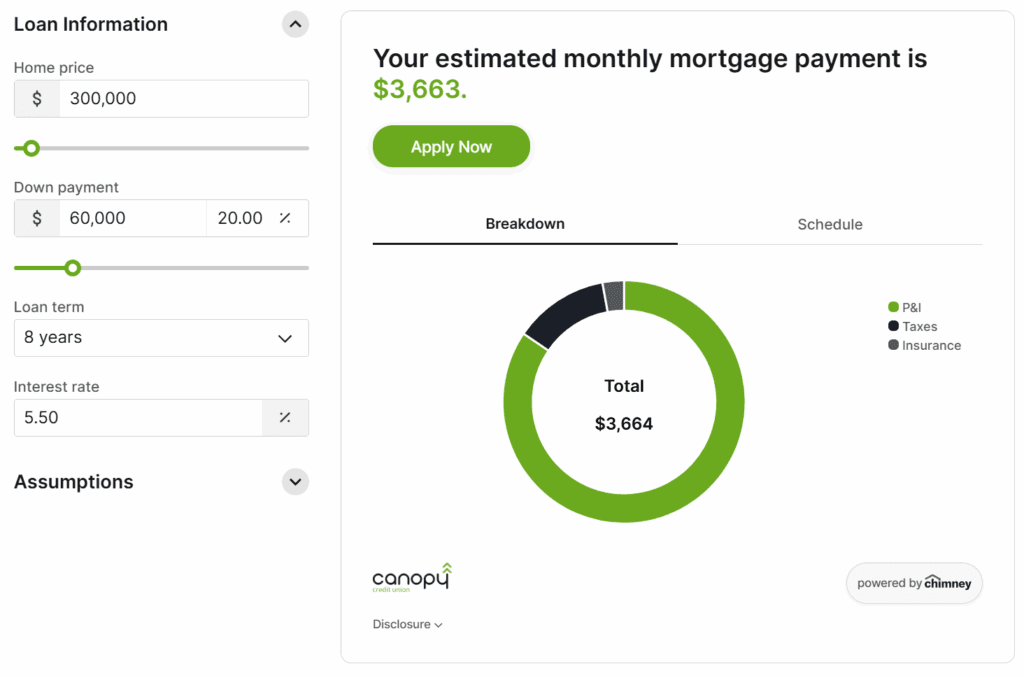
Wondering what your monthly payment might look like? Our land loan calculator makes it simple. Just enter your land purchase price, down payment amount, and loan term to see an estimate of your monthly payment.
apply for a residential land loan online
We’re proud to support our Spokane community by helping neighbors secure the land they need to grow. With our simple online application, you can get started from anywhere, eliminating the need to wait or visit a branch.
Apply today and let our friendly member advocates guide you every step of the way. Together, we’ll make it possible for you to own the land you’ve been dreaming of.

land loan FAQs
You asked, we answered! Here are the frequently asked questions of our Spokane members.
Can I Get a Tax Exemption for a Residential Land Loan?
If you have plans to build on land, you can be eligible for a tax exemption with your land loan. However, if you don’t have a plan to build on it yet, you may not qualify for one. Consult with a tax professional to know more.
What are the Loan Terms for Residential Land Loans?
Land loans can have shorter terms than traditional mortgages, but at Canopy, we offer terms up to 20 years to make financing flexible for our members.
Why are Residential Land Loans Seen as a High Risk?
Land loans are considered high risk because there is no physical structure on the property to serve as collateral. For instance, if a borrower already lives on the land where a home is located, they are more likely to keep up with mortgage payments to remain in their home.
Does my Residential Land Loan include construction expenses?
Residential Land Loans cover the cost of the land itself, not additional construction costs.
Do I need a construction loan?
No, you do not need a construction loan to build on your land. At Canopy, we offer options like cash-out refinances and HELOCs to finance the construction of your dream home.
Can I use a residential land loan to purchase recreational land?
No, residential land loans are for a specific type of land you plan to build a home on. Purchasing recreational land requires a different type of loan.
our latest articles




land loan resources
Learn more about land loans with our extensive resources.
News Listing Grid will go here. Waiting for News population.